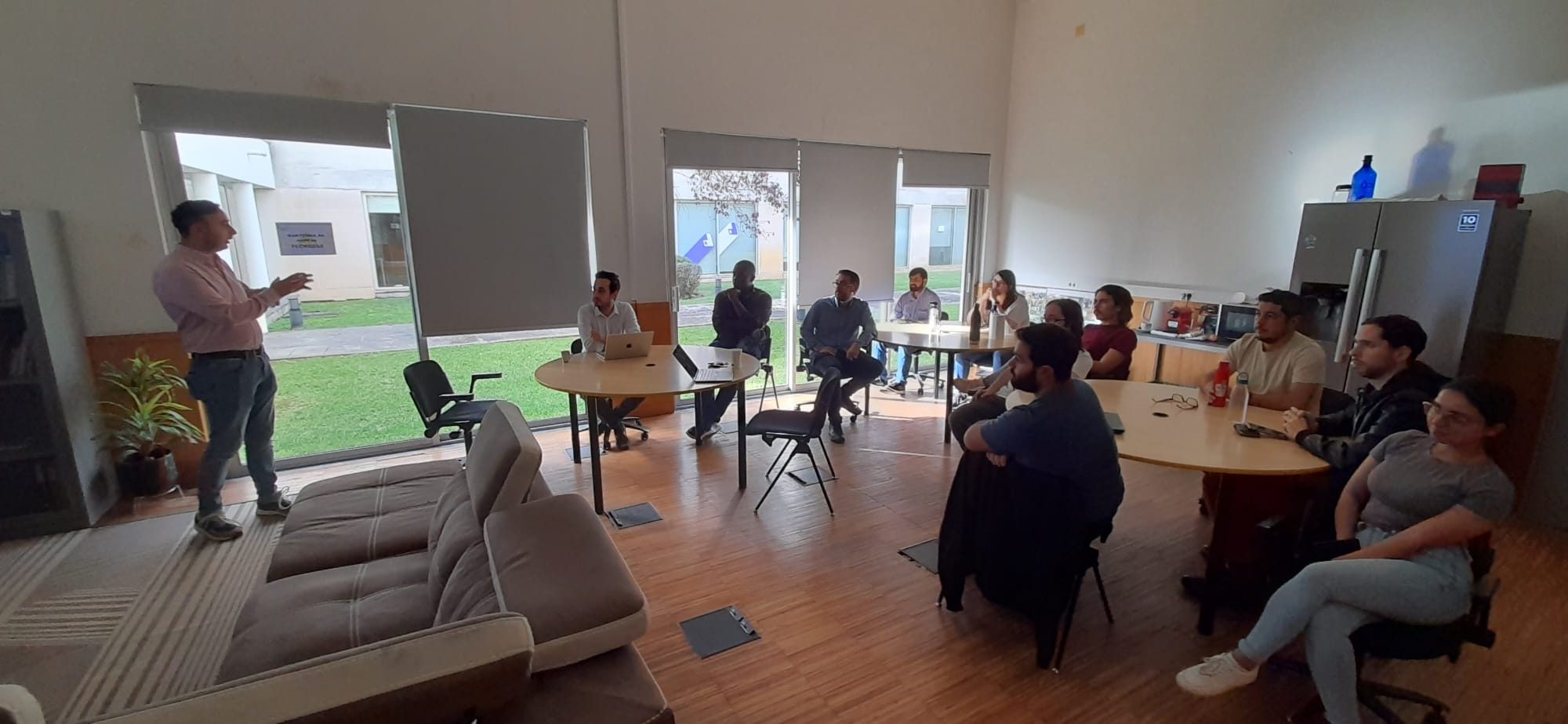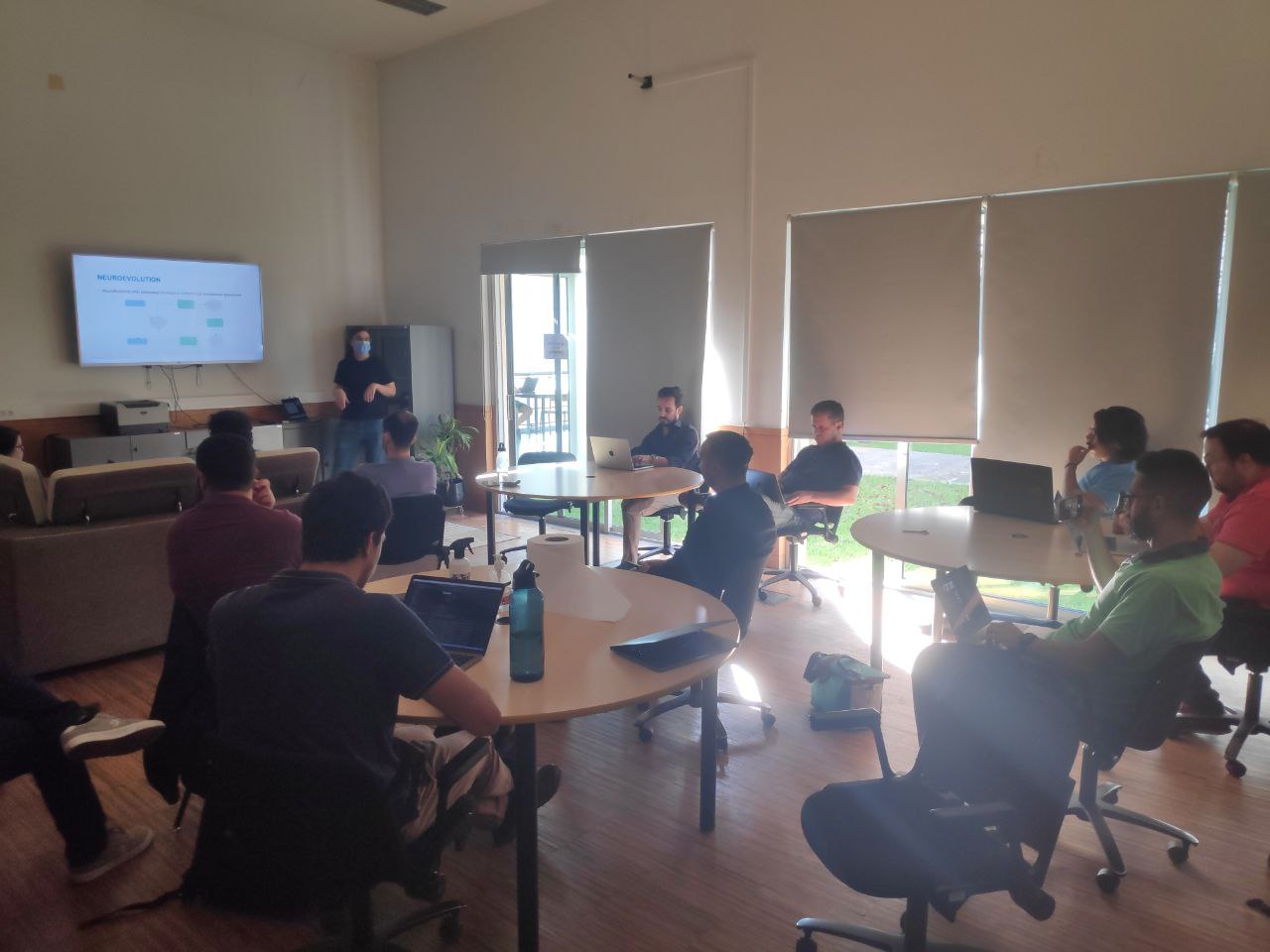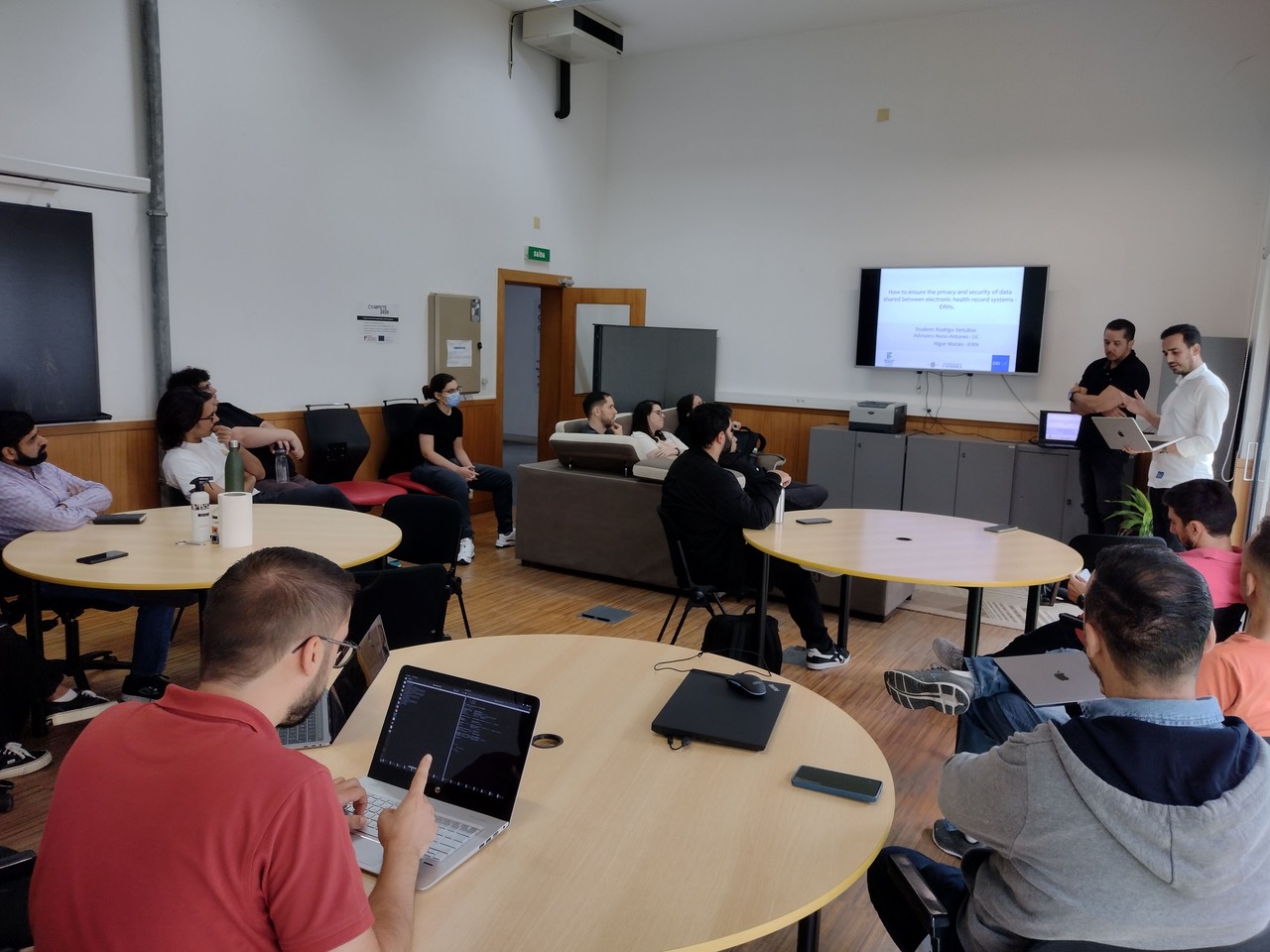
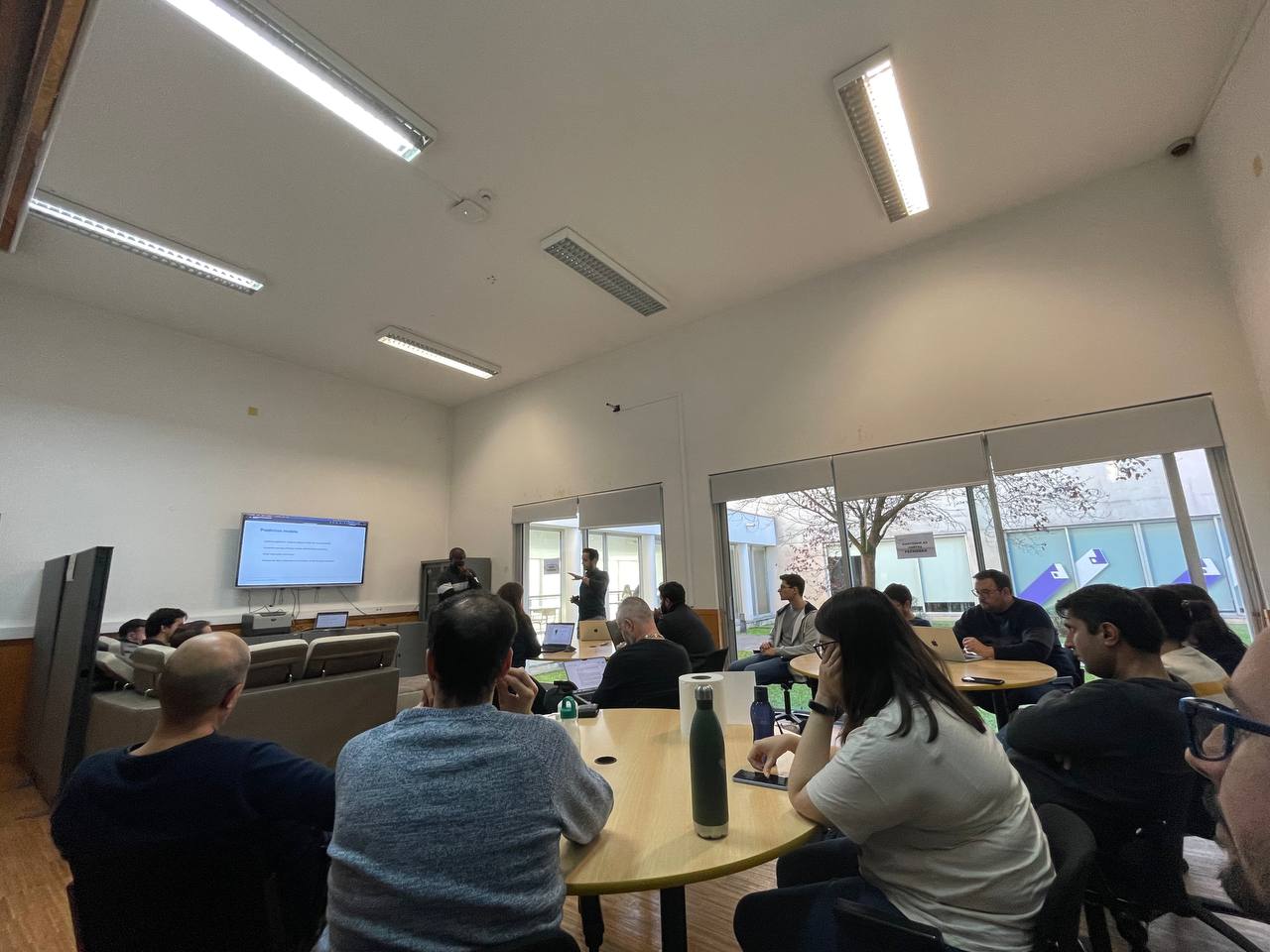
9th of November at 16h00, Jomar Domingos and Filipa Nogueira will give two short presentations, to promote discussion on two relevant ongoing or disruptive topics. Afterwards, there will be a social gathering where everyone can talk freely on whatever subjects they like.
Location: G4.1
Jomar Domingos – “Online Failure Prediction for cloud Applications in a Multi-level Approach”
Bio
Jomar Domingos is a Ph.D. candidate in Informatics Engineering at the University of Coimbra, Portugal, where he also received his MSc in 2019. His current research is related to the online failure prediction for cloud applications through multi-level ensemble learning, i.e., considering cloud computing abstraction layers in the process of online failure prediction.
Abstract
Cloud computing assumes a crucial role in the current technological landscape (mainly in the internet technology industry), as it increasingly becomes the de facto approach to deploy applications and provide services through internet. Due to its complexity and heterogeneity, application failures occurrences are not uncommon, given its wide fault presence surface (from application/service to other cloud stack layers), and reactive approaches are becoming insufficient to handle failures. In some scenarios (such as business ans mission critical), dealing with failure after they happen can be very costly, being necessary to find another paradigms to deal with failures. Online failure prediction aims to deal with failures before they really happen, allowing to take measures to reduce their impact or completely avoid failures, increasing application/services dependability (improving the availability and reliability attributes).
Although previous works on this topic have already been presented, failure prediction for cloud application remains a open topic, where concrete implementations are rarely adopted and implemented. Conventional online failure prediction are focused on the prediction target, observing and modeling the its behaviour (form metric and produced logs), without considering the environment where it resides and operates (although some works considered the spatial information, it was limited to location and resource sharing information). Our focus is to investigate and explore online failure prediction for cloud applications as a multi-level problem, where prediction should be made considering every cloud abstraction layer, i.e., predict application failures on every relevant cloud platform abstraction layer.
Filipa Nogueira – “Process Mining Software Engineering Practices: A Case Study for Deployment Pipelines”
Bio
Filipa Nogueira is a PhD candidate for the Doctoral Program in Information Science and Technology at the University of Coimbra and a member of the SSE research group. Her current main research interest focuses on the concepts related to Process Mining applied to the Software Engineering field and topics that concern improving the quality of software products and processes. She is also an Engineering Team Lead in an e-commerce company where her tasks include team and project management while ensuring software delivery with speed and quality.
Abstract
In mature software development, the deployment pipeline is the only route to deploy software into production, comprising different cycles: commit, acceptance and production. This means that DevOps teams should be able to develop, integrate and test features quickly and thoroughly via continuous practices. Even though the description of this process seems straightforward, the reality is quite different since exceptions are commonplace in actual industry practice. Process Mining provides tools to discover and check the compliance of DevOps processes while uncovering the bottlenecks and improvement areas.
This talk aims to present a case study on the adoption of Process Mining techniques in the deployment pipeline process (CI/CD) of a large European e-commerce company. The research focuses on the visibility provided by Process Discovery techniques in the DevOps workflow, namely in the process and time perspectives.