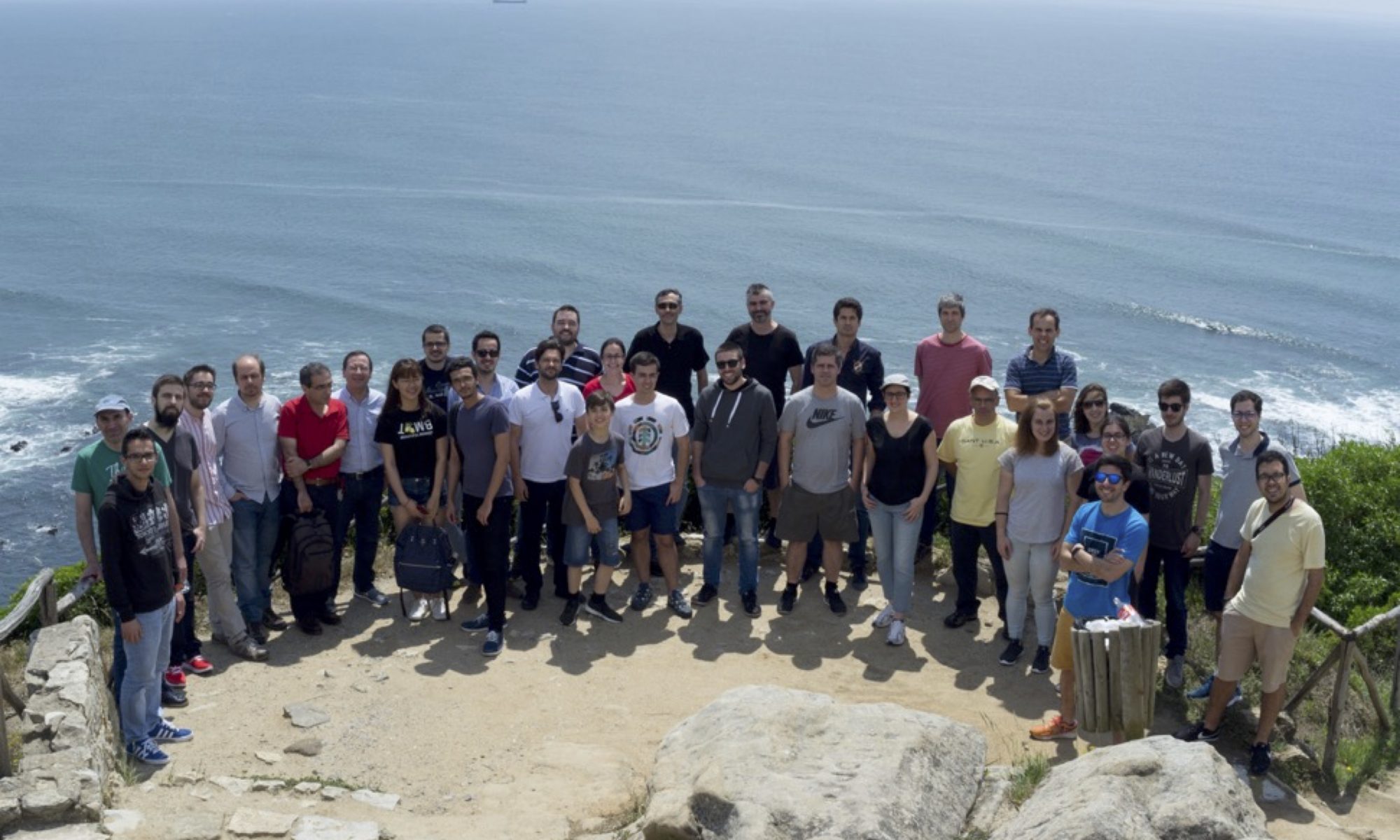
[Away Day] – 2018, Figueira da Foz
Software and Systems Engineering (SSE)
Centre for Informatics and Systems (CISUC)

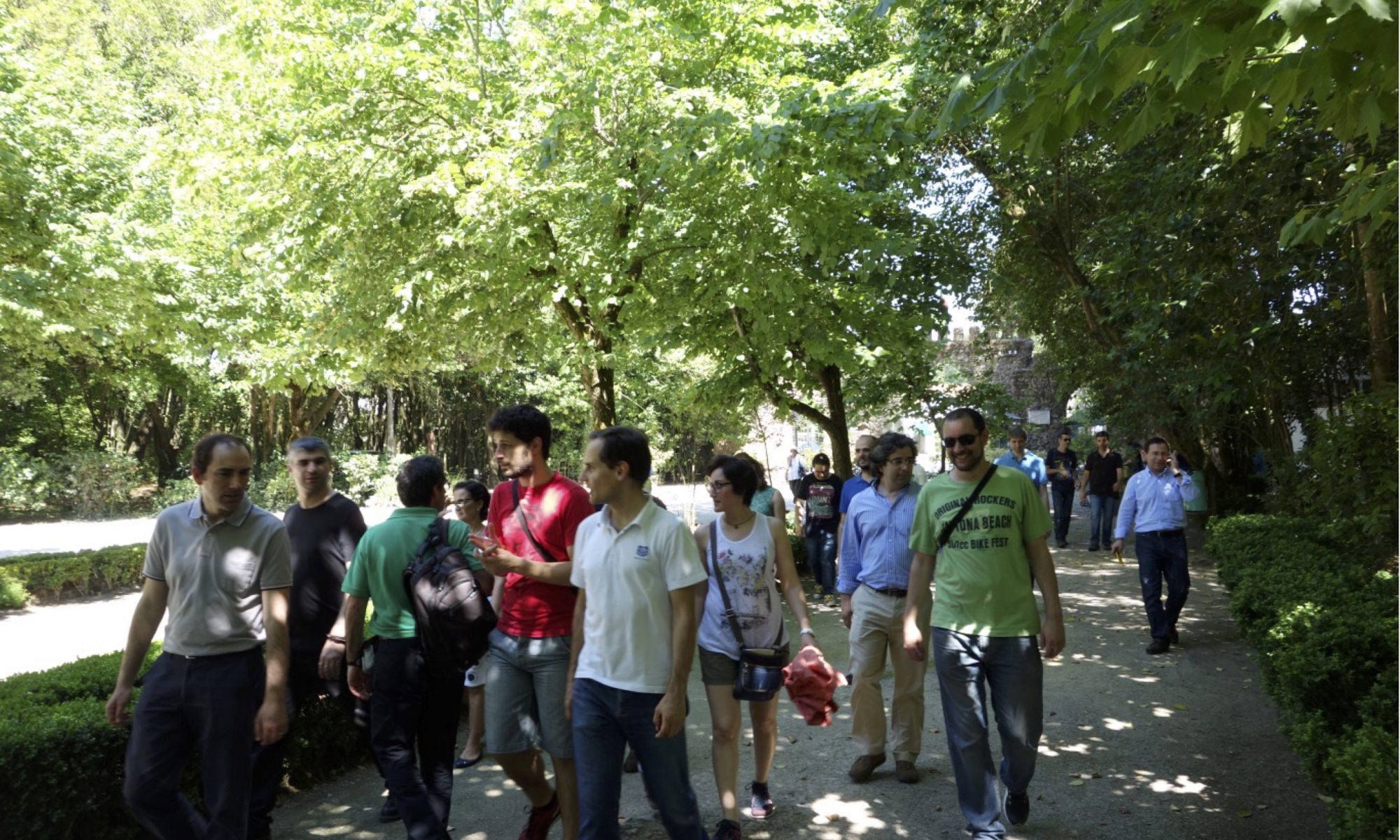
Welcome to the SSE group!
You must subscribe the following mailing lists using your @student.dei.uc.pt/@dei.uc.pt email. Do not forget to provide your name as well, so that the moderator can identify you easily (do not subscribe as “digest“):
You must also subscribe the SSE calendar: https://calendar.google.com/calendar/ical/tca0cs4e33c9b3sf4s0vclreg4%40group.calendar.google.com/public/basic.ics . Group events will be scheduled there.
The group has several labs: G 4.3, G 4.5, and G 4.6. Room G 4.1 is also allocated to SSE, it is our meetings/community room, you are free to use it (responsibly)! You should go to the administration office on the ground floor to request access (along with your supervisor) to the lab to which you were assigned, to room G 4.1, and to both side entrances to the department. With this access you can access the department/labs at any time (24h/7).
Every 2nd and 4th Wednesday of every month there is a discussion session called Talk Ideas, that you must attend! It takes place at 16:00h in room G4.1. They are scheduled in the SSE calendar and notifications will be sent prior to every session.
At the end of the year there is also a special group event, SSE Away Day. Further details are shared closer to the event!
If you need further assistance feel free to contact any member of the group.
Here, you find useful information when start being a student at the University of Coimbra (UC):
NOTE: this information does not replace the need of reading the official documentation/information
Helpdesk@DEI: https://helpdesk.dei.uc.pt
Inforestudante: https://inforestudante.uc.pt/
Student Hub: https://www.uc.pt/en/studenthub/
Health Services:
Canteens:
Bus lines: 34 (from Polo I to Polo II), 38 (from Santa Clara to Polo II).
Académica: You can also find sportive information in their website: https://academica.pt
A variety of official information is available at the official University of Coimbra website (https://www.uc.pt/international-applicants). A comprehensive welcome guide, with detailed steps and instructions, can be accessed here: https://www.uc.pt/international-applicants/welcome-guide/WelcomeGuideUC_web.pdf .
Notwithstanding, in this post you can find several relevant details compiled by previous researchers of SSE.
IMPORTANT NOTE: this is information is provided AS IS and may contain errors or be incomplete. It does not replace the need of reading the official information available at both the University of Coimbra and government platforms!
For both masters and bachelors (PhD documents as well if you are applying for PostDoc):
1. Attestation of degrees + transcripts (including grading scale if it’s not mentioned on your transcript) from Hague Convention
OR
1. Attestation of degrees + transcripts (including grading scale if it’s not mentioned on your transcript) from higher education commission
2. Attestation of degrees + transcripts (including grading scale if it’s not mentioned on your transcript) from Ministry of Foreign Affairs
3. Attestation of degrees + transcripts (including grading scale if it’s not mentioned on your transcript) from Embassy of Portugal in ther country where the degree was obtained.
For project grants, you only need to provide this for your master’s degree (or the PhD degree in case of PostDoc). However, if you wish to apply for FCT grants, you’ll also need to provide this for your bachelor’s degree. Official details can be found here https://www.uc.pt/en/academicos/graus/reconhecimentos.
1. Provide a syllabus of your degree on the university’s letterhead, signed by the dean or someone higher up in the department on each page. The format should include a summary of the courses on the first page, followed by each subsequent page dedicated to a detailed syllabus for each course you’ve taken.
2. Choose the degree that’s closest to yours by visiting this link: https://apps.uc.pt/courses/en/index?q=&ou=&type=PRIMEIRO
3. Apply for specific recognition (automatic recognition for many Brazilian students, must check with the academics department if you’re eligible for it) AND grade conversion through DGES by filling out the form at https://www.dges.gov.pt/recon/formulario . For more information, visit https://www.dges.gov.pt/en/pagina/degree-and-diploma-recognition?plid=1536.
The best option is to book accommodation from:
1. The residencies of the university.
Students at SSE suggest also visiting the following sites:
2. https://www.uniplaces.com/
3. https://www.studentville.pt/en
4. https://www.idealista.pt/
5. https://www.owme.pt/
6. https://saferentcoimbra.com/
7. https://www.remax.pt/
8. https://radical.pt/
9. https://www.uc.pt/sasuc/apoios/alojamento/
1. The visa has to be of the type “Residence visa > 1 year” for students (researchers for postDoc).
2. Should apply in advance, though the visa process and time depends upon the individual country, but keep 5-7 weeks time.
Should bring a vaccine card (childhood vaccine history card) containing tetanus vaccine translated in English, though it is a requirement from the university and not for the visa, it is an important document. If you have not had this vaccine, you can get this in Portugal as well, but it is suggested if you have it, you should bring it with you.
If you have a partner and/or kids, you can apply for your visa first. Once your visa is approved, you can apply for an accompanying visa for your partner and/or kids (if any). The required documents may vary by country, so be sure to check the requirements on the VFS Global website: https://www.vfsglobal.com/en/individuals/index.html.
OR
If the above option is not available or feasible for you, you can use the family reunification route. In this case, you’ll only need to apply for your residence visa. Once you’re in Portugal and have received your TRC (Temporary Residence Card), you can apply for family reunification through SEF. You’ll need to provide documents for your family members that have been attested by the Ministry of Foreign Affairs and the Portuguese embassy in your country or the Hague Convention, including a color copy of their passport. The required documents are listed on https://imigrante.sef.pt/en/solicitar/residir/art98-1/ . Once you have clearance from SEF, you can send the clearance document to your family and they can apply for their residence family reunification visa.
You can take flights for either Porto or Lisbon airports, and from there it’s preferred to use a train (https://www.cp.pt/passageiros/en), which you can book them online in advance. You can also choose the bus to Coimbra, and the main bus services are Flixbus (https://www.flixbus.pt/ ) and Rede Expressos (https://rede-expressos.pt/pt ). There is also an Airport shuttle service available to Coimbra (https://coimbra.airportshuttle.pt).
Must request for a NIF number (tax identification number) from Loja do cidadão in the first few days after arriving. The requirement is a valid visa with your passport and proof of address/accommodation.
You can also create a NISS (Social Security) number from the same place (i.e Loja do cidadão), but this is not a mandatory requirement, the documents requirements are the same as for NIF.
Preferred bank account options:
1. Santander bank
2. Novo banco
…
(there are several other options also, but do check the requirements, since most of other the banks require at least a TRC)
Required Documents:
1. Passport and valid visa
2. Scholarship agreement (if there is)
3. Multipurpose certificate (if you do not have this certificate, your supervisor can provide a proof of your enrollment that you are a student in the university)
4. Proof of address
5. Proof of NIF
6. University student card
It is highly suggested if you are on a scholarship/grant, to generate the multipurpose certificate in the first month of admission, because this is a mandatory document in many processes, and only in the first month you have access to generate it without paying the tuition fees.
Your appointment would be mentioned on your visa as a link, in case it is not mentioned or you have missed it, the university of Coimbra has a SEF office in Student Hub, Polo I. You can book an appointment for that through https://www.uc.pt/studenthub/. SEF has another office at Loja do cidadão but for that you will need to book an appointment by calling SEF.
The required documents are mentioned in https://imigrante.sef.pt/en/solicitar/estudar/art91/
1. Getting degree recognition and grade conversion, especially with specific recognition, is a very bureaucratic and lengthy process. This leads to students studying and working for several months (e.g., 3-6 months) without income. For international students being from many different countries and backgrounds, affording the expenses for a few months might not be feasible and this process needs to be smoothened.
If you need funding for your PhD, there are typically two sources: project scholarships and Fundação para a Ciência e Tecnologia (FCT) scholarships.
Project scholarships can usually be found here: https://apply.uc.pt/explore/scholarships . The duration of these scholarships varies between calls and the output/quality of the work done. Tuition fees may or may not be covered by the scholarship, you need to check the public notice. While these scholarships allow you to finance your research/PhD, they typically also require you to contribute to the project objectives.
FCT PhD scholarships have a call every year. The details for 2023 can be found here: https://www.fct.pt/en/concursos/concurso-bolsas-de-doutoramento-2023-linha-de-candidatura-geral . These scholarships are ideal, as they cover the tuition fees and provide funding for the whole PhD. Best of all, they allow you to focus solely on your research. Notwithstanding, they are very competitive, as there are few scholarships available when compared with the number of applications.

Bruno Cabral
bcabral@dei.uc.pt
Room D.1.09
Business Intelligence and Data Analytics
Code Instrumentation
Programming Languages and Concurrent Programming
Software Fault Injection
Virtual Machines and Reflexive Languages
Fernando Barros
barros@dei.uc.pt
Room D.1.19
Software Product Lines
Software Reuse
Theory of Modeling and Simulation

Filipe Araújo
filipius@uc.pt
Room D2.01
Computer Networks
Distributed Systems

Frederico Cerveira
fmduarte@dei.uc.pt
Room G.4.3
Fault Injection
Virtualization
Cloud Computing
Hardware Faults
Software Faults
Fault Tolerance

Fuqun Huang
huangfuqun@dei.uc.pt
Room D.1.17
Human Errors in Software Engineering

Henrique Madeira
henrique@dei.uc.pt
D3.02
AI in critical applications
Dependability and security benchmarking
Experimental dependability evaluation
Fault injection
Human error in software engineering
Verification and validation

João R. Campos
jrcampos@dei.uc.pt
Room G4.5
Artificial Intelligence and Machine Learning
Evolutionary Computation
Failure Prediction
Autonomous Systems
Dependability
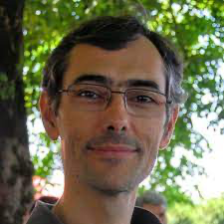
João Cunha
Polytechnic University of Coimbra
jcunha@isec.pt
Dependability evaluation
Real-time embedded systems
Reconfigurable systems

João Durães
Polytechnic University of Coimbra
jduraes@isec.pt
Dependability Benchmarking
Fault Injection / Software faults
Software reliability
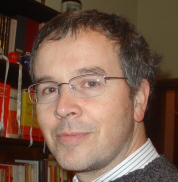
João Gabriel Silva
jgabriel@dei.uc.pt
Room D3.04
Dependable parallel computing
Experimental Dependability Evaluation
Low-cost Fault-Tolerance

Jorge Bernardino
Polytechnic University of Coimbra
jorge@isec.pt
Big Data
Business Intelligence
Data Warehousing
NoSQL
Open Source Software
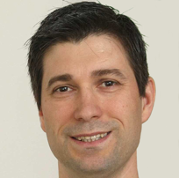
José Fonseca
josefonseca@ipg.pt
Attack Injection
Intrusion detection in Databases
Vulnerability Injection
Web Application Security

Marco Vieira
mvieira@dei.uc.pt
Room D.1.7
Dependability and Security Evaluation and Benchmarking
Fault Injection and Vulnerability & Attack Injection
Online Failure Prediction
Resilience Benchmarking
Robustness and Security Testing
Software Verification & Validation

Mário Zenha-Rela
mzrela@dei.uc.pt
D2.26
Dependable Computing
Process Mining Software Repositories
Requirements Engineering
Software Engineering
Software Fault-Tolerance
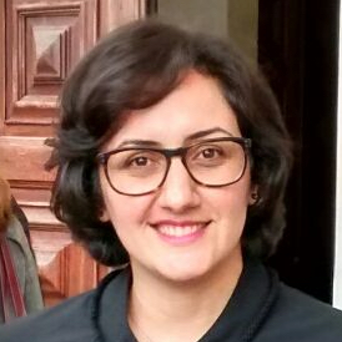
Naghmeh Ivaki
naghmeh@dei.uc.pt
Room D.1.17
Dependability and Security of software systems
Design Patterns
Distributed Systems and Reliable Communications
Trust and Trustworthiness of computer systems

Nuno Antunes
nmsa@dei.uc.pt
D.2.05
Cloud Security
Dependability Assessment
Dependable and Secure Software
Intrusion Detection
Security Benchmarking
Verification and Validation
Vulnerability Detection

Nuno Laranjeiro
cnl@dei.uc.pt
D.3.14
Dependability Evaluation
Software Security Assessment
Web Services
Machine Learning in Software Development
Blockchain

Pedro Costa
pcosta@iscac.pt
Dependability Benchmarking
Software Fault Injection
Software Fault Tolerance
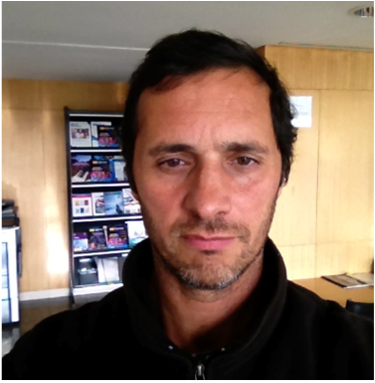
Pedro Furtado
pnf@dei.uc.pt
Room D.1.11
Adaptivity for QoS in Data Intensive Systems
Data Management and QoS in Peer-to-peer and mobile systems
Data Warehousing, OLAP
Parallel and Distributed Databases
Performance in Transactional and DW Databases
QoS Engineering in Networks, Internet and Databases
Workflows and Contracts

Raul Barbosa
rbarbosa@dei.uc.pt
Room D3.11
Reliable software and systems
Safety and availability design and evaluation
Cloud computing
Dependable software architectures
Reliable AI
Model checking
Fault injection
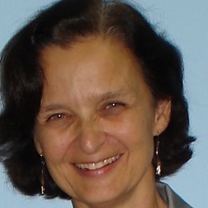
Regina Moraes
remoraes@dei.uc.pt
UNICAMP/UC
Software privacy and security, Testing on DevSecOps, Testing of Cyber Physical Systems
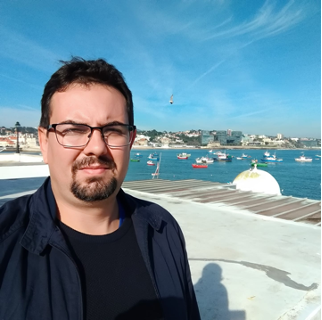
Rodrigo Rocha Silva
FATEC Mogi das Cruzes, São Paulo Technological College
rrochas@dei.uc.pt
Big Data
Data Mining
Data Warehousing
Knowledge Representation
NoSQL
OLAP
Planning and Scheduling
Sentiment Analysis
Software Engineering
Text Mining
The following UC / DEI /CISUC templates are available:
Affiliation Rules in your papers
Except when otherwise noted, the rules are of mandatory nature. Also, whenever the paper template allows it, please include your ORCID ID.
A page has been created on the CISUC website for quick reference to this information, follow it to the letter:
https://www.cisuc.uc.pt/en/acknowledgements