[Talk Ideas] 3rd of December, Vinícius Cogo (FCUL)

Abstract
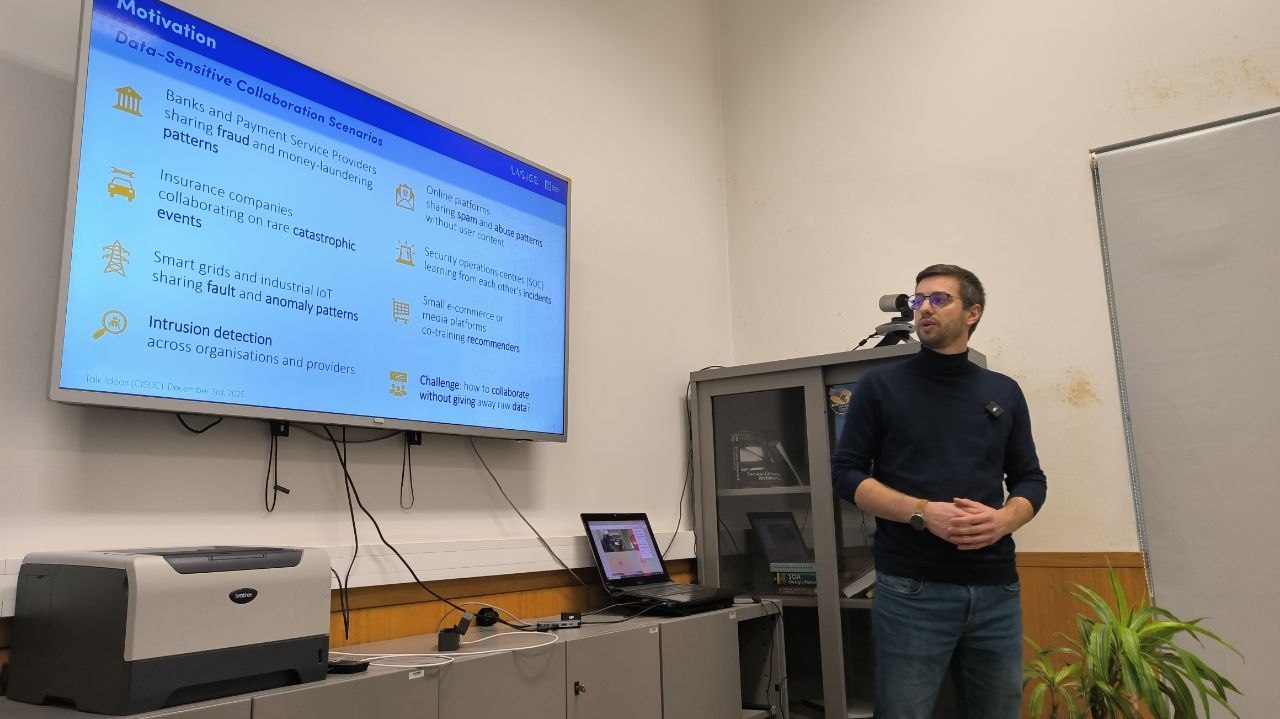
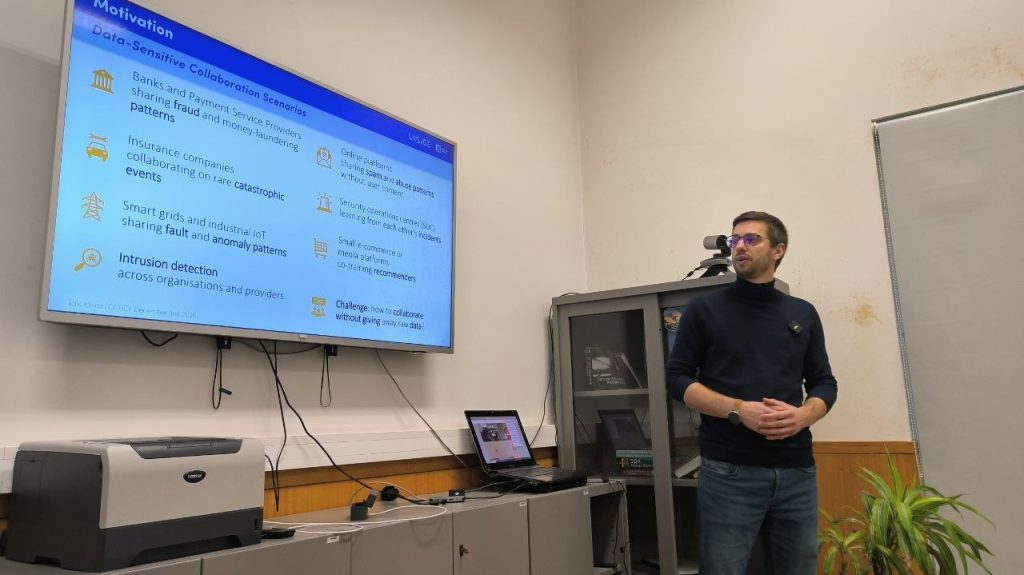
In this talk I will present a hybrid peer-to-peer federated learning framework that combines personalisation and reputation-based trust to robustly support context-aware applications such as intrusion detection. The system organises participants in a hybrid overlay that combines a flexible peer-to-peer layer with a tree of superpeers that temporarily coordinate model aggregation. A distributed reputation mechanism evaluates each node’s contributions, promoting reliable participants and limiting the influence of suspicious ones, while personalisation adapts the global model to each client’s local traffic patterns. We evaluate a proof-of-concept implementation on a public network intrusion dataset and show that both personalisation and reputation are important to keep detection accuracy stable when clients have heterogeneous data and some participants behave incorrectly or maliciously.

Bio
Vinicius V. Cogo is an Assistant Professor in the Department of Informatics at the Faculty of Sciences of the University of Lisbon (Ciências ULisboa) and an integrated researcher at LASIGE. He holds a PhD and an MSc in Informatics from Ciências ULisboa and a BSc in Computer Science from the UFSM (Brazil). His research focuses on distributed systems, dependability, fault tolerance, secure storage of critical data, and cloud computing.
[Talk Ideas] – 26th of November, 15:00, João Donato – MINSAIT/INDRA Roundtable

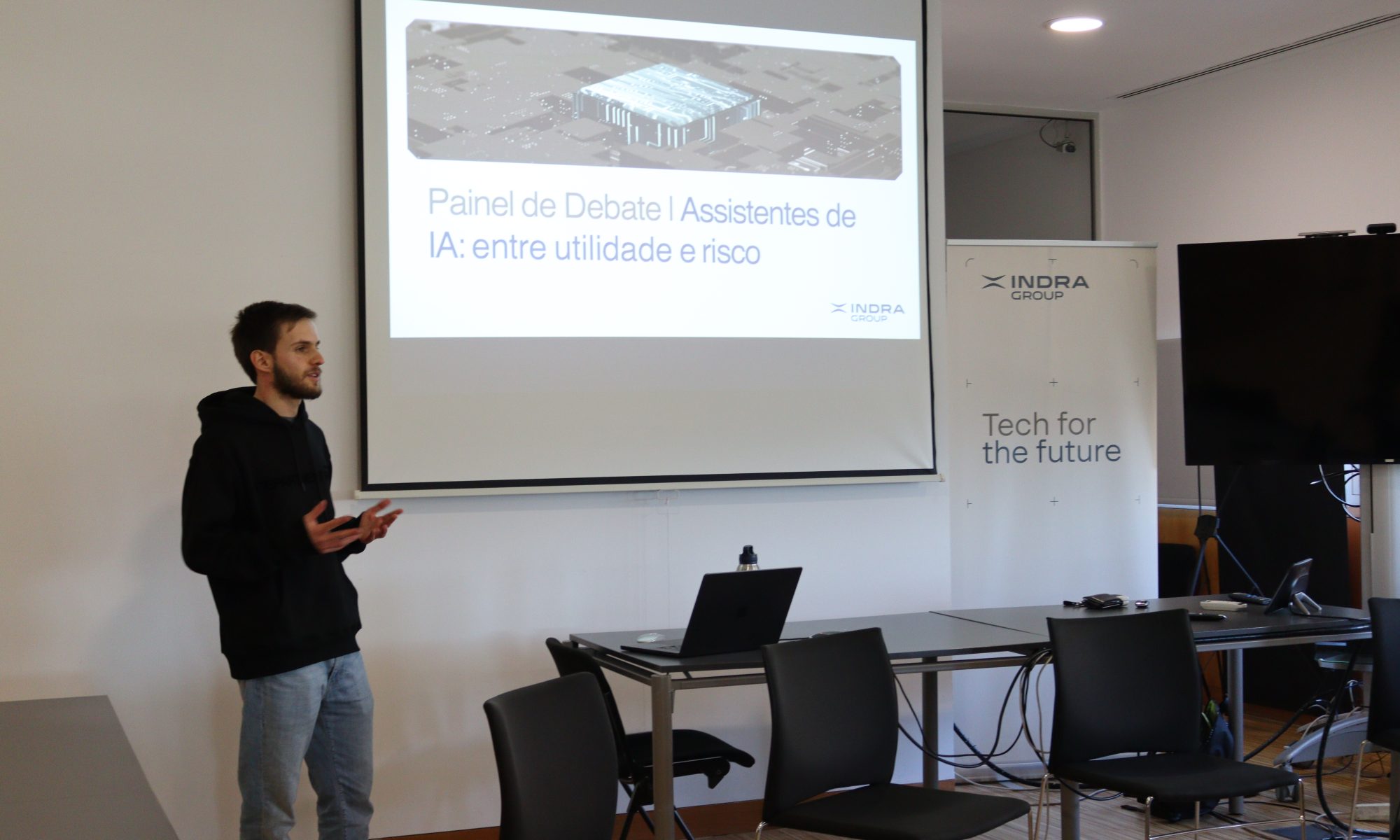
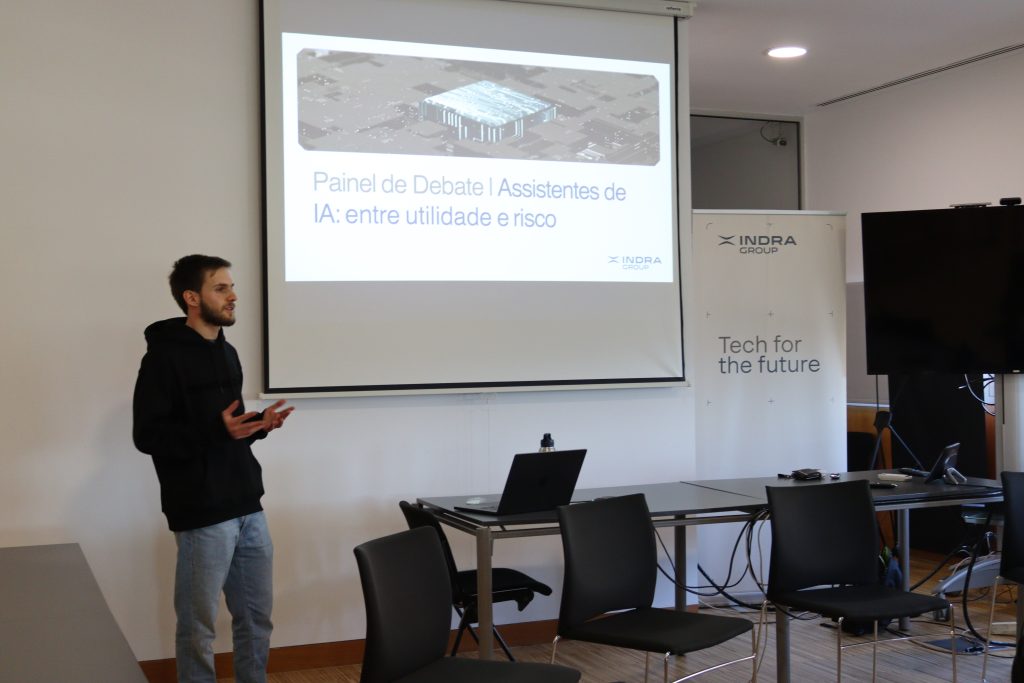
João Donato gave a presentation entitled “Benchmarking LLM robustness against prompt-based adversarial attacks”, as part of our ongoing collaboration with the MINSAIT/INDRA group. João recently completed his M.Sc. with us, and INDRA, who co-sponsored his work, wishes to highlight this collaboration to a broader national audience.

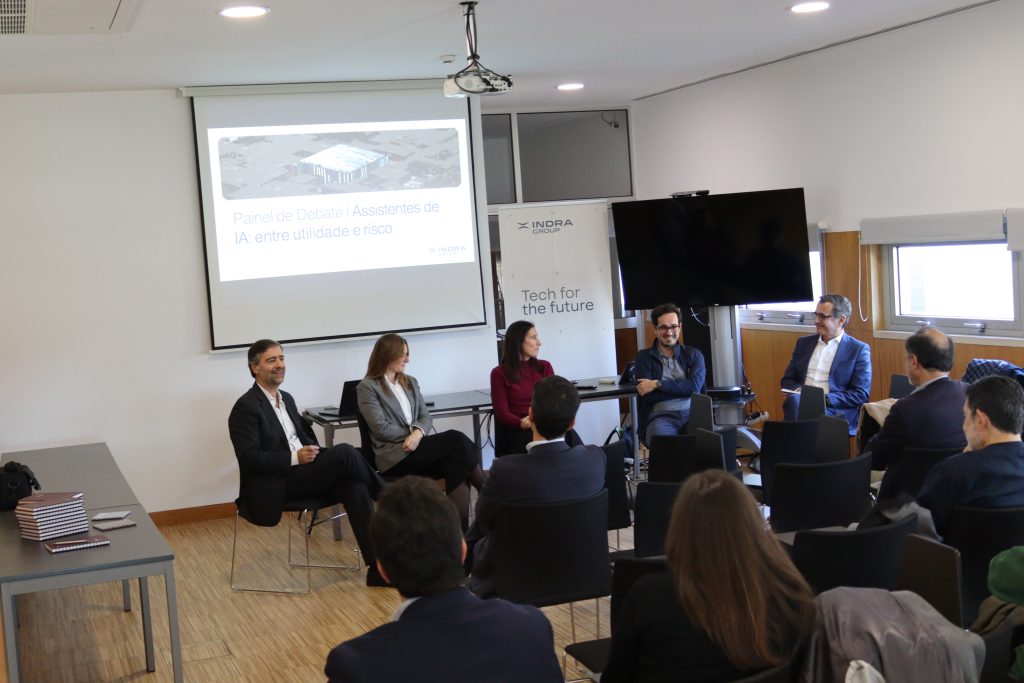
The presentation was be followed by a roundtable discussion with Helena Peixoto (CIO at Plural+Udifar), Ana Ferreira (RISE/FMUP), and António Ribeiro (Head of Cybersecurity at MINSAIT/INDRA) on the challenges of using and integrating AI agents in operational contexts.

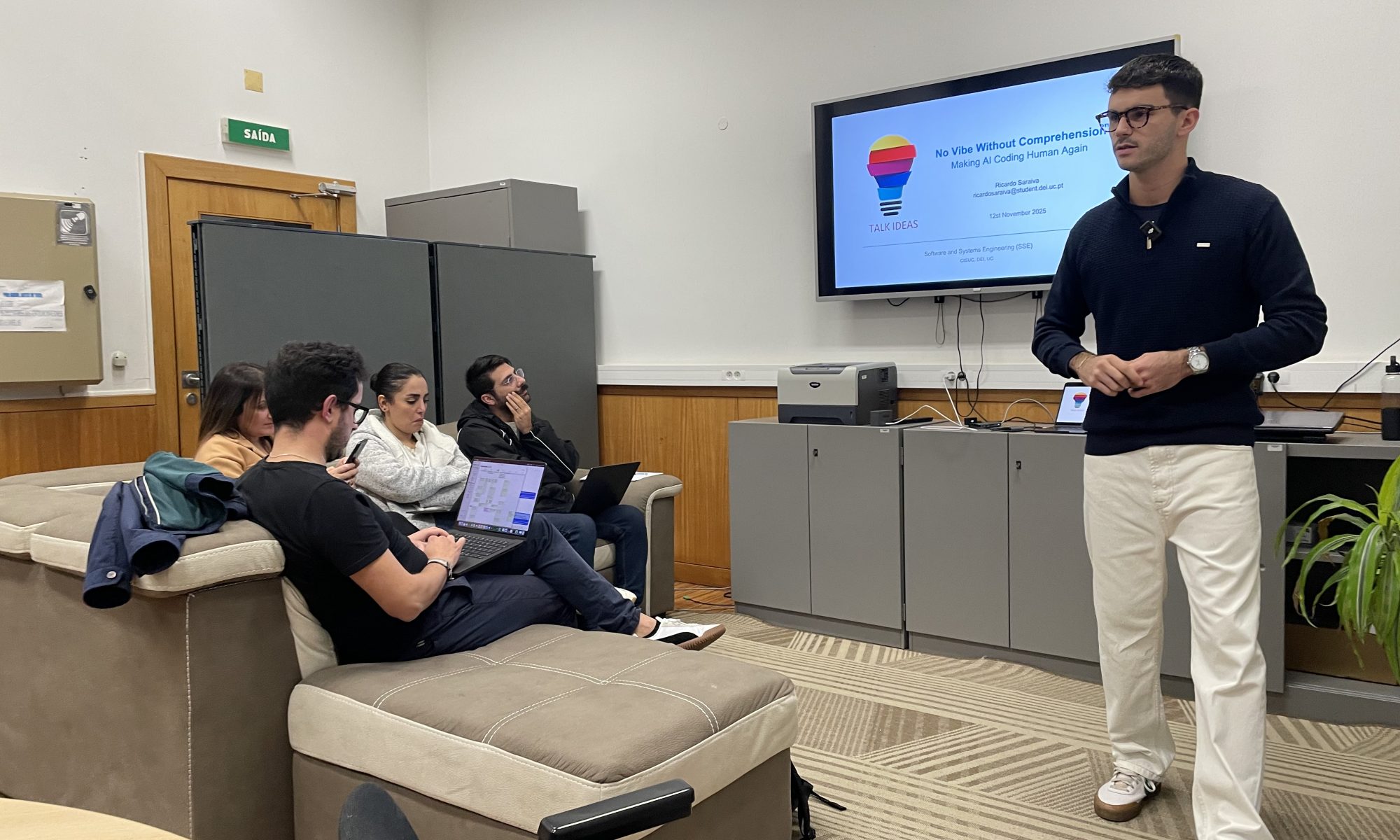
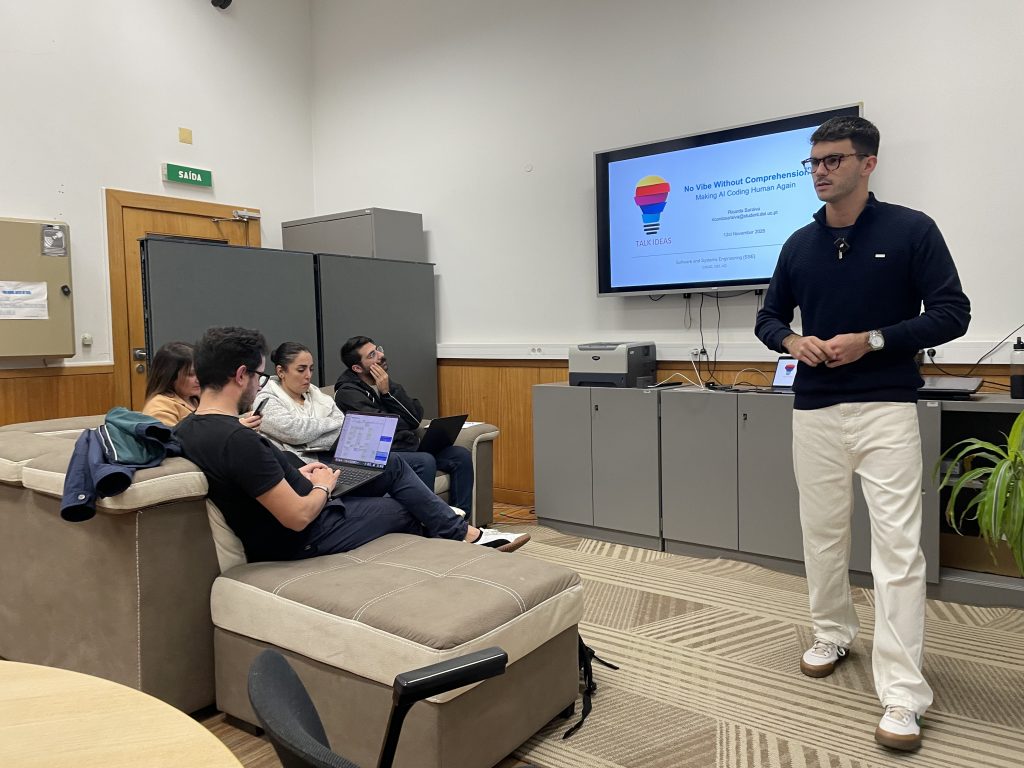
[Talk Ideas] 12th of November 2025, Ricardo Saraiva

Abstract
As AI tools such as Copilot and ChatGPT reshape how we write software, programming is increasingly turning into “vibe coding” — where developers generate and run code without truly understanding it. This shift raises crucial questions about reliability, security, and accountability. In this talk, I will present a human-centred AI framework that measures real code comprehension through neurophysiological signals such as eye-tracking, EEG, and heart-rate variability. Instead of relying on cognitive load as a proxy, the model directly quantifies understanding using ground-truth comprehension scores. In experiments with 50 developers and seven Java tasks, this approach achieved 75% AUC while remaining practical through non-intrusive sensors. The results indicate the development of a new generation of comprehension-aware tools. These tools can identify misunderstandings, adapt explanations, and restore human comprehension in AI-assisted coding.

Bio
Ricardo Saraiva, PhD candidate in Informatics Engineering at the University of Coimbra (CISUC). The research explores how neurophysiological signals such as eye tracking, EEG, and heart-rate variability can be used to measure code comprehension and enhance human–centred AI in software engineering.